
Comparing Two Titans: Hornsby vs. Judge
ALSO: TEAMS UNAFRAID TO DUMP OVERPAID MALCONTENTS

Pregame Pepper
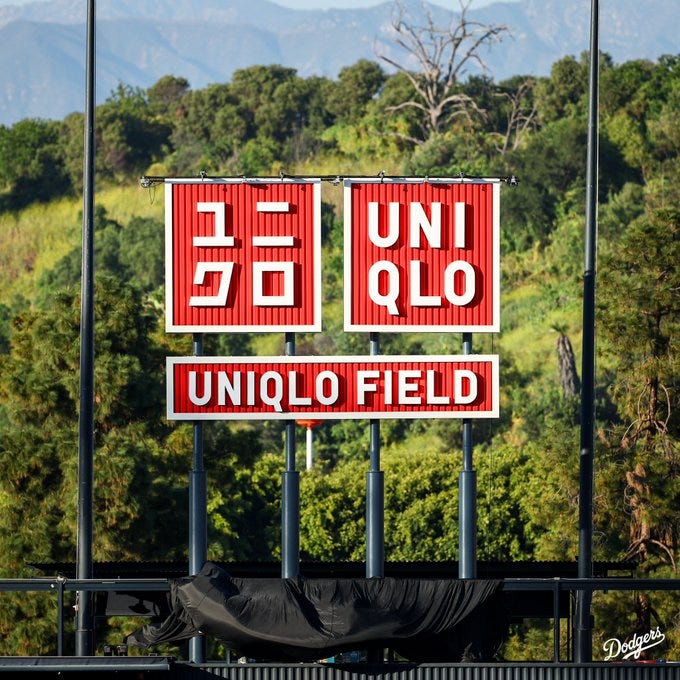
Their bloated payroll has finally caught up with the Dodgers, who have officially changed the name of their 64-year-old ballpark to Uniqlo Field at Dodger Stadium. In a joint release with the team, the Japanese apparel retailer revealed it will have “naming displays in various stadium locations, including above the batter’s eye in center field, on the facade beneath the press box, and on the grass along the baselines” as part of the agreement . . .
Nationals Park and Yankee Stadium are the only remaining parks without corporate names . . .
Surprise, surprise: Blake Snell of the Dodgers has hit the IL again, this time with shoulder fatigue . . .
Fellow lefty Framber Valdez, now with Detroit, is tied with Max Fried (Yankees) for most wins this decade and second in quality starts to Zack Wheeler (Phillies) . . .
Fried, shooting for his first Cy Young Award, got off to a fine start Wednesday by pitching into the seventh in San Francisco to spearhead a 7-0 win for the visitors . . .
New Mets ace Freddy Peralta, 29, gives that team the ace they lacked since trading Justin Verlander and Max Scherzer during the 2023 campaign.
Leading Off
Rogers Hornsby in 1926 vs. Aaron Judge in 2026
By Paul Semendinger
This is the time of year when everyone makes their predictions for how teams and players will perform. Fans and experts alike will use formulas, past stats, and more, to project, they believe with accuracy, what will occur during the coming season.
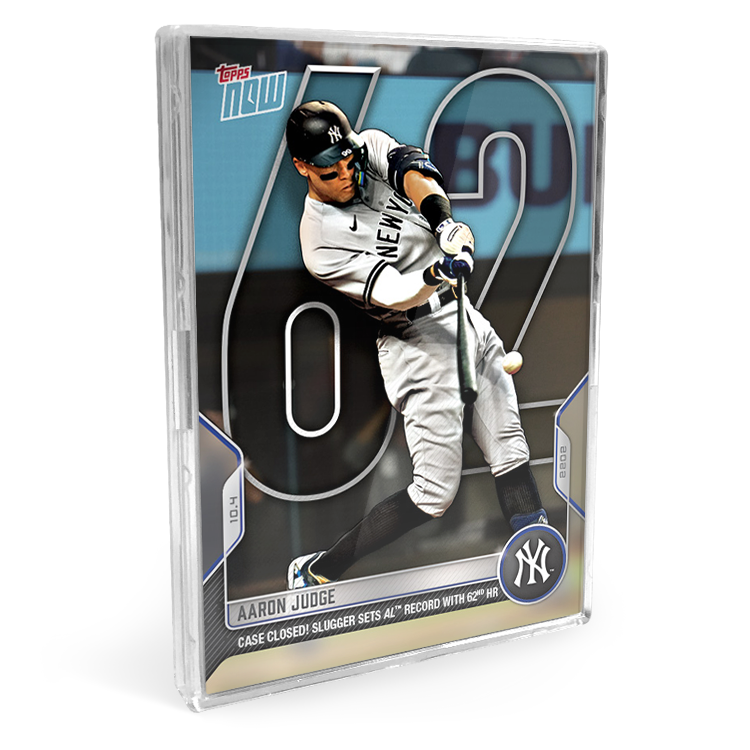
I decided to take a unique approach to try to ascertain what Aaron Judge’s 2026 campaign might look like.
Rather than using any regular projection methods, I wanted to find a player in baseball history that had a peak of dominance similar to Aaron Judge over the last few years.
I wanted to see if there was a player, who like Judge, put up an OPS+ over 200 for three years in a four-year period. I wondered if there was a one-to-one comparison I could use with that player that might indicate how Aaron Judge might perform in the coming season.
In this exercise, I quickly found that there were not many players, at all, who have dominated as Judge has since 2022. In this period, Aaron Judge has gone from a very good player to one who can stand with and among many of baseball’s all-time greats.
The list of players with an OPS+ over 200 in any season is a short one. Only 17 players other than Aaron Judge have ever accomplished that feat. Of them, only seven exceed the 200 OPS+ mark on more than one occasion.
The following are the only players in baseball history with multiple seasons with an OPS+ above 200:
Babe Ruth - 10
Ted Williams and Barry Bonds - 6
Rogers Hornsby - 4
Ty Cobb and Aaron Judge - 3
Jimmie Foxx and Mickey Mantle - 2
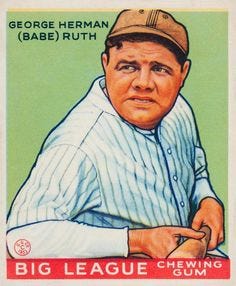
It is difficult to compare any players to the first three names on the list. Babe Ruth stands alone; he always has. Ted Williams’ career was interrupted through his military service in two wars. Barry Bonds’ stats are tainted with suspicion.
But then standing alone, and quite similar to Judge is Rogers Hornsby.
Just like Aaron Judge, Rogers Hornsby had an OPS+ over 200 in three out of four seasons doing this in 1922, 1924, and 1925.
In the one year that he didn’t reach a 200+ OPS in that period, 1923, Hornsby put up a 188.
Aaron Judge had 200+ OPS+ seasons in 2022, 2024, and 2025. In the one year he didn’t put up an OPS+ over 200, 2023, Judge had a 175.
The comparison seems valid. And, amazingly, Hornby’s seasons were exactly 100 years before Judge’s.
This all, finally, brought me to Rogers Hornsby’s 1926 season to see if it might be a predictor for Aaron Judge’s 2026 season.
In 1925, Hornsby batted .403/39/143.
But in 1926, Hornsby had a “disappointing” year, batting .317/11/93.
In 2025, Aaron Judge batted .331/53/114.
If Aaron Judge’s 2026 ends in a similar fashion to Hornsby’s, with the same percentage drops in batting average, homers, and runs batted in, he will hit only .260/15/74 in 2026.
To most Yankees fans, this would seem to be a disaster, but, all is not as it might seem...
In 1926, in spite of his down year, Rogers Hornsby’s St. Louis Cardinals won the World Series.
Paul Semendinger’s newest book The Greatest New York Yankees By Uniform Number is now out and available wherever books are sold.
Cleaning Up
“We Could Have Finished Last Without You”
By Dan Schlossberg
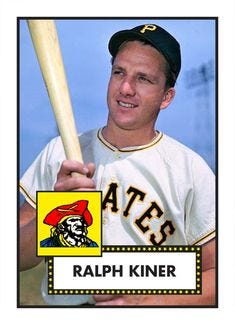
That was Branch Rickey’s reply to Ralph Kiner when the Pittsburgh slugger was asking for a salary increase. And that was long before million-dollar salaries became common.
In the days when players had one-year contracts and agents weren’t even a figment of their collective imagination, negotiations between players and general managers were annual — with the odds tilted greatly in favor of the executives.
If the GMs weren’t satisfied with those salary talks, they often traded the malcontents away.
As recently as 1972, for example, the St. Louis Cardinals sent future Hall of Famer Steve Carlton to the Philadelphia Phillies in what they thought was good riddance rather than a good deal. Carlton and the Cards could not agree on his next salary and negotiations were growing acrimonious.
Wise, the only man to pitch a no-hitter and hit two home runs in the same game, was a solid starting pitcher. But he couldn’t hold a candle to the left-handed Carlton, who won four Cy Young Awards.
The New York Mets later grew wary of Tom Seaver demanding to renegotiate his contract. So they traded the man nicknamed “the Franchise” to Cincinnati for four journeyman players at the 1977 trade deadline.
And then there are the Miami Marlins, perennial penny-pinchers in computing player salaries. On November 12, 2012, they hooked up with the Toronto Blue Jays to clear their payroll of veterans Mark Buehrle, Jose Reyes, Josh Johnson, John Buck, and Emilio Bonifacio, acquiring Yunel Escobar, Henderson Alvarez, Jeff Mathis, Adeiny Hechevarria, and prospects Anthony DeSclafani, John Nicolino, and Jake Marisnick.
But the ultimate salary dump occurred 100 years ago, on Dec. 20, 1926. That’s when the World Champion Cardinals cut bait with cantankerous player-manager Rogers Hornsby, who had angered owner Sam Breadon with his demands for a three-year contract worth $150,000 — big money at the time.
A six-time batting champion and local hero in St. Louis, Hornsby brought Frankie Frisch — the Fordham Flash — and Jimmy Ring from John McGraw’s New York Giants.
Seven years later, with both baseball and the country suffering from The Great Depression, Philadelphia Athletics owner Connie Mack began a fire sale needed to keep his franchise solvent. On Dec. 12, 1933, he sent Lefty Grove, Max Bishop, and Rube Walberg to the Boston Red Sox for Harold Warstler, Bob Kline, and $125,000.
Mack had already unloaded Al Simmons, Jimmie Dykes, and Mule Haas to the White Sox for $150,000 and would also pare payroll by parting with Mickey Cochrane, Jimmie Foxx, and George Earnshaw.
The deals netted nearly $1 million for the A’s but also plunged the ballclub into the basement, where it stayed for decades before reviving in Oakland.
Connie Mack could have told his stars the same thing Branch Rickey told Ralph Kiner years later: “We could have finished last without you.”
And they did.
HtP weekend editor Dan Schlossberg of Fair Lawn, NJ covers baseball for forbes.com, USA TODAY Sports Weekly, Sports Collectors Digest, and Memories & Dreams. He’s also the author of 43 baseball books. Contact him via ballauthor@gmail.com.
Extra Innings: Catching Up
”Here’s what the problem is: Money helps us win. We can’t win all the time. We’ve got to have some parity. So we’ve got to come up with something that will give us some parity.”
— Dodgers owner Mark Walter in the Los Angeles Times
The Yankees and Mets are two of the three teams, along with the Blue Jays, that have three starters who made at least 30 starts last season . . .
Max Fried, Carlos Rodon, and Will Warren did it for the Yanks while Clay Holmes, Freddy Peralta, and David Peterson did it in the National League . . .
Toronto’s terrific troika is Jose Berrios, Kevin Gausman, and Dylan Cease (with San Diego) . . .
The World Champion Dodgers tied the Houston Astros last season for best in baseball with 11 pitchers who made at least five starts . . .
The Mets prevented then-manager Buck Showalter from interviewing Carlos Beltran for a coaching job after the former center fielder’s involvement in the Houston’s 2017 World Series sign-stealing scandal . . .
Topps created a panel of baseball historians to pick the Top 75 subset featured in its 2026 card product . . .
Shohei Ohtani has five cards in the Top 75 including his 2018 Bowman rookie and two 2025 Gold Logomans — including the one that sold for $3 million last December . . .
Former Phillies second baseman Chase Utley finished third in this year’s Hall of Fame voting with 59.1 per cent — well short of the required 75 per cent . . .
Although Gary Carter, John Franco, Keith Hernandez, and David Wright have carried the honorary title of team captain, current Mets owner Steve Cohen says the club will not bestow it upon anyone else . . .
All-or-nothing slugger Aaron Judge, captain of Team USA in the World Baseball Classic, fanned four times in the Yankees opener in San Francisco . . .
And teammate Paul Skenes, who normally pitches for Pittsburgh, suffered an embarrassing start to the season when he was knocked out in the first inning of the CitiField opener by the Mets yesterday.
Know Your Editors
Here’s the Pitch is published daily except Sundays and holidays. Benjamin Chase [biggentleben@hotmail.com] handles the Monday issue with Dan Freedman [dfreedman@lionsgate.com] editing Tuesday and Jeff Kallman [easyace1955@outlook.com] at the helm Wednesday and Thursday. Original editor Dan Schlossberg [ballauthor@gmail.com], does the weekend editions on Friday and Saturday. Former editor Elizabeth Muratore [nymfan97@gmail.com] is now co-director [with Benjamin Chase and Jonathan Becker] of the Internet Baseball Writers Association of America, which publishes this newsletter and the annual ACTA book of the same name. Readers are encouraged to contribute comments, articles, and letters to the editor. HtP reserves the right to edit for brevity, clarity, and good taste.