
Robinson Cano's Career Came To Sorry End
PLUS: CoolToday Park Is Cool Spring Training Facility

Reader Reacts to Editor’s Comments on WBC
“Sorry, but your idea of playing the WBC in November is unworkable. No players are going to want to play a high-intensity tournament in November after a long season.
Plus, what do you do with the players who’d be in such a tournament who aren’t in the post-season? They’d be sitting around for a month, then have to ramp up again.
The current setup isn’t great, but it might be the best we can do. I love the WBC and its intensity. Jayson Stark had a good idea in a recent column -- play the pool rounds in March, then the championship rounds at the All-Star break.
Regarding your comment about spring training ticket prices, MLB teams are already putting an inferior product on the field even in non-WBC years, where minor-leaguers play about half the games anyway.
Spring training isn’t for players to get ready for the season anymore, as it was in years gone by. Back then, players had to take off-season jobs, so needed those games to get in shape. Now, players don’t need to do that, so they stay in shape all winter. Most MLB players will tell you they don’t need a 35-game preseason to get ready for the season. So spring training has become a profit center. And people pay the prices as they are, mostly to get out of winter weather for a few days in March.”
— Al Yellon, Chicago
Pregame Pepper
Tom Yawkey of the Boston Red Sox was the first Hall of Fame owner who never served as a player, manager, or general manager during his career . . .
Houston shortstop Jeremy Pena is the latest World Baseball Classic casualty but not many managers are demanding that its timing could be better . . .
Max Scherzer is the only man to pitch for four different World Series teams . . .
Versatile infielder Jim (Junior) Gilliam was a star in the Negro Leagues before the Brooklyn Dodgers brought him up and won four world championships in the next seven years . . .
As outlined in the book Jim Gilliam: the Forgotten Dodger, he had the last hit in Brooklyn history, hit the first homer at Chavez Ravine, and scored the first run in both the L.A. Coliseum and Dodger Stadium . . .
Speaking of the Dodgers, Shohei Ohtani has five different cards in the 75-card set honoring the 75th anniversary of Topps baseball cards . . .
A panel of industry experts picked the top 75 cards for the gum company . . .
Because he’s also Jewish, Rowdy Tellez could have chosen Team Israel rather than Mexico for his stint in the 2026 World Baseball Classic.
Leading Off
Robinson Cano — All These Years Later
By Paul Semendinger
A quick note: when I write some of these articles, I do not draw the conclusion before I write them. I sometimes use writing as a way to explore various theories and ideas.
I saw a comment the other day that referred to the Yankees dodging a bullet when they did not sign Robinson Cano after the 2013 season. As I read that comment, I thought of the poor way that Cano’s career ended, mired in controversy from PEDs and, at the very end, poor production. I began to wonder if the Yankees ended up being correct in not offering a big contract to Cano or if their decision was a poor one.
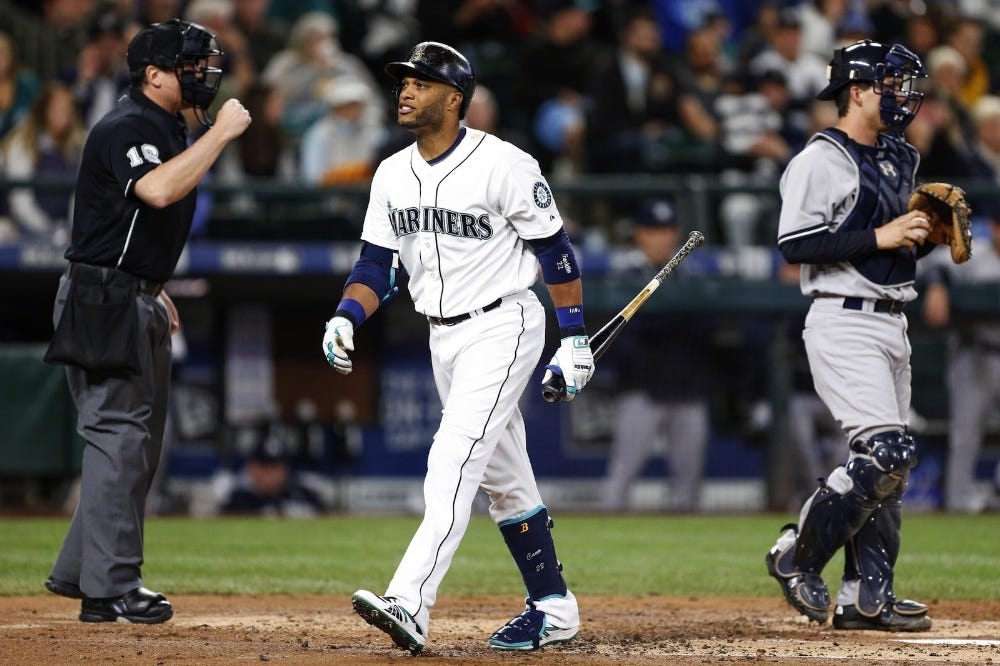
A further note as I dig into my examination... I am basing this analysis entirely on Cano’s on-field numbers. I am not getting into the debates about PEDs, cheating, and the like and if those numbers enhanced Cano’s production. I don’t know when Cano began using PEDs. I don’t know if anyone knows that. We also do not know if that use would have started (or continued) had he stayed in New York. This analysis will be based entirely on the numbers, although once he started missing time for PED suspensions, Cano’s impact was obviously lessened.
One last note: after the Yankees failed to sign Cano, they almost immediately made the poor decision to sign Jacoby Ellsbury. I am not going to speculate on whether or not Ellsbury would have been a Yankee had Cano stayed in the Bronx.
In Cano’s absence the Yankees used the following players as their starting second basemen: Brian Roberts (2014), Stephen Drew (2015), Starlin Castro (2016-17), Gleyber Torres (2018), DJ LeMahieu (2019-21), and Gleyber Torres again (2022-23).
This analysis will be strictly based on Robbie Cano against his replacements on the Yankees during the period of his ten-year contract. Time allows us now to look back on that entire period critically.
2014:
Robinson Cano batted .314/14/82 with a 142 OPS+. Cano earned 6.3 WAR that season
Brian Roberts batted .237/5/21 with an 87 OPS+ and earned 0.7 WAR
2015:
Cano: .287/21/79, 117 OPS+, 3.8 WAR
Stephen Drew: .201/17/44, 77 OPS+, 0.1 WAR
2016:
Cano: .298/39/103, 138 OPS+, 7.3 WAR
Starlin Castro: .270/21/70, 92 OPS+, 1.2 WAR
2017:
Cano: .280/23/97, 114 OPS+, 3.1 WAR
Castro: .300/16/63, 106 OPS+, 2.1 WAR
2018:
Cano: .303/10/50, 136 OPS+, 3.3 WAR
Gleyber Torres: .271/24/77, 122 OPS+, 3.4 WAR
First Five Years Summation:
After the first five years of Robinson Cano’s ten-year deal, the statistics demonstrate that Cano well outperformed the players they Yankees tried to replace him with. In that period, Cano totaled 23.8 WAR compared to only 7.5 WAR put up by the Yankees’ second basemen.
That fifth year, though, seemed a portent of bad things to come for Robinson Cano. That year he played in only 80 games due to a PED suspension. After that season, he was traded to the New York Mets. In 2018, the Yankees also finally had second baseman who was performing as Cano’s equal or better.
One final note, after two seasons in New York, Starlin Castro was a big part of the trade that brought Giancarlo Stanton to the Yankees beginning in 2018.
2019:
Cano: .256/13/39, 95 OPS+, 07 WAR
DJ LeMahieu: .327/26/102, 136 OPS+, 5.6 WAR
2020:
Cano: .316/10/30, 143 OPS+, 1.3 WAR
LeMahieu: .364/10/27, 178 OPS+, 3.0 WAR (Of note, LeMahieu led the A.L. in batting average, OPS+, and WAR)
2021:
Cano - Suspended
LeMahieu: .268/10/57, 97 OPS+, 1.6 WAR
2022:
Cano: .150/1/4, OPS+ 7, -1.5 WAR (only 33 games played)
Torres: .257/24/76, 113 OPS+, 4.1 WAR
2023:
Cano - Did not play
Torres: .273/25/68, 118 OPS+, 2.9 WAR
Final Notes:
Over Robinson Cano’s ten-year contract, he earned 24.4 WAR. The Yankees’ second basemen in that period earned 27.7 WAR. Gleyber Torres and DJ LeMahieu outperformed Cano significantly over the final five years of the contract. Also of note, being present is an essential aspect of playing baseball. Over the final three years of Cano’s contract, LeMahieu and Torres played in 448 games compared to Cano’s 33.
Conclusion:
While it did not seem like the Yankees would get the better of the deal in the first years on Cano’s big contract, in the end, the Yankees fared better by not signing Robinson Cano to a ten-year deal after the 2013 season.
Paul Semendinger’s newest book, THE GREATEST NEW YORK YANKEES BY UNIFORM NUMBER is received great early praise and will be rele4asede to the public on March 17, 2026. Reach out to Paul to schedule a book talk via Zoom or, possibly even in person. Paul also loves promoting other authors on his podcasts and on Start Spreading The News.
Cleaning Up
CoolToday Park Is Cozy, Comfortable, Photogenic
By Dan Schlossberg
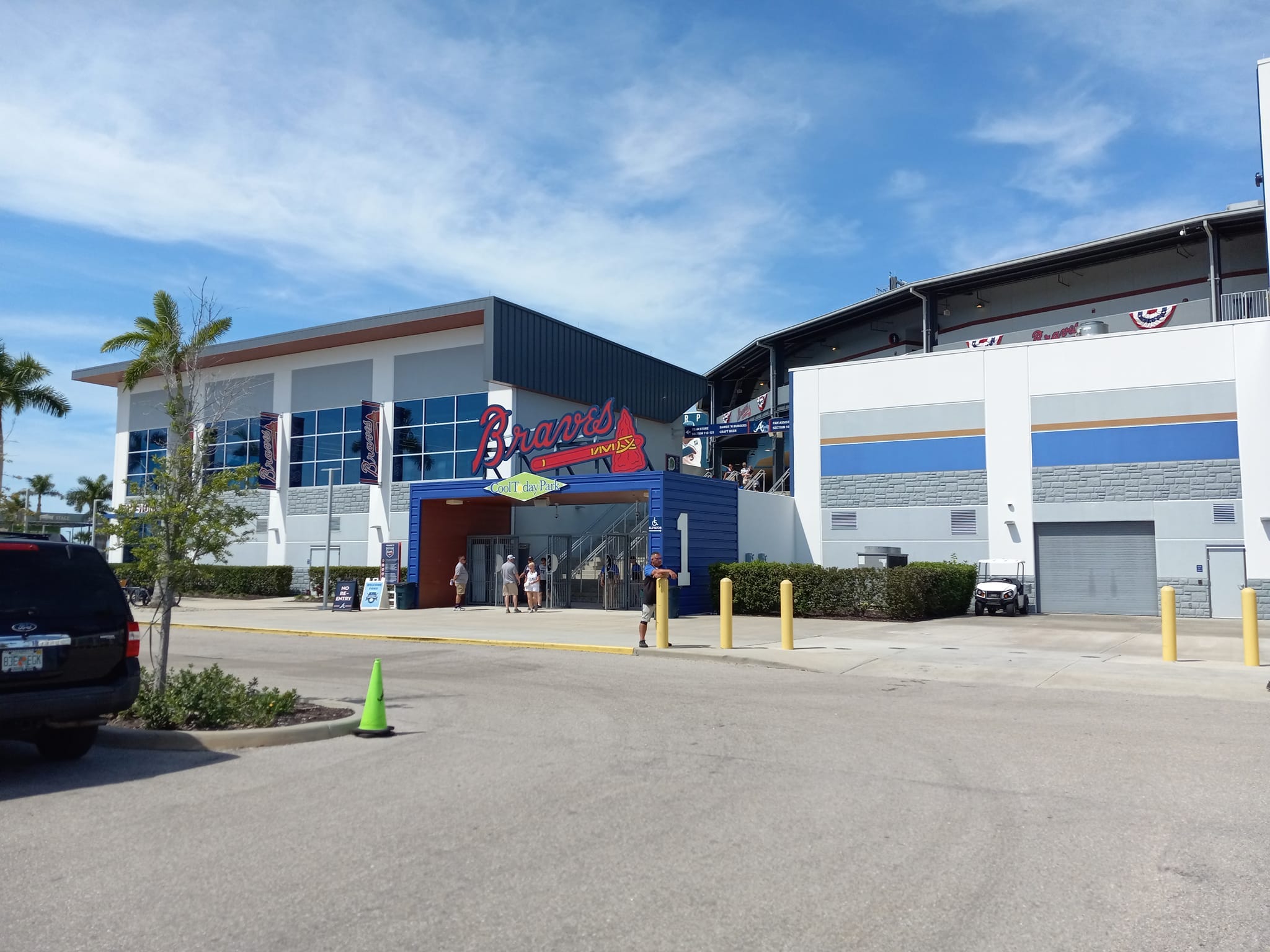
The designers of CoolToday Park, spring training home of the Atlanta Braves since 2019, wisely included features from other Florida ballfields.
Like nearby Charlotte Sports Park, spring home of the Tampa Bay Rays, there’s a clubhouse behind the right-field fence. Like LECOM Park, where the Pittsburgh Pirates train in Bradenton, there’s an outfield grandstand.
The tiki bar in left field mirrors the one Phillies fans will find at BayCare Ballpark in Clearwater. And the elevated grassy berm in left field — common to many spring training spots — is a perfect place to spread a blanket, bask in the Sunshine State’s sun, and show off skimpy beach wear at the ballpark.
There’s even a hint of Truist Park, the Cobb County home of the Atlanta Braves during the regular season: the outfield dimensions are almost identical.
Named after a local air-conditioning, heating, and plumbing firm, CoolToday Park officially opened on March 24, 2019, when the Braves made a one-day visit to their future springtime home. Atlanta icons Hank Aaron and Bobby Cox, both members of the Baseball Hall of Fame, participated in the ribbon-cutting and opening ceremonies.
Aaron (44) and Cox (6) are two of the Braves icons whose retired numbers greet arrivals at CoolToday Park. Other numbers salute Greg Maddux (31), Tom Glavine (47), Chipper Jones (10), and Eddie Mathews (41). Now that he’s in Cooperstown, Andruw Jones’ 25 should be added.
But otherwise there are few complaints about the complex, which is easy to approach, easy to leave, and easy to get around.
The $140 million facility features an 8,000-seat baseball diamond, team clubhouse, and half-a-dozen baseball practice fields plus six multi-use fields and the team’s sports medicine academy. A planned town center district that will incorporate a local college and medical offices has yet to be added. But there’s plenty of room.
There’s even room for special events on non-baseball days, especially in the public plaza along West Villages Parkway.
The Braves moved to North Port, once a sleepy village in the southern end of Sarasota County, at the instigation of John Schuerholz, architect of the juggernaut that won a record 14 straight division titles starting in 1991. Schuerholz, then the general manager, had a home in Naples, on the Gulf side of the state, and wanted to stay close.
He engineered negotiations that generated funding from the State of Florida ($20 million), Sarasota County ($21.2 million), the City of North Port ($4.7 million), and private developer Mattamy Homes ($4.7 million). The Braves provided the first $18 million in funding the facility.
The final agreement followed a report that the team’s mutually guaranteed 30-year lease would generate $1.7 billion (with a “b”) to the area over the course of its stay.
All of that pleased team officials, who spent nearly 20 years (1997-2019) in the shadow of Mickey Mouse at Disney World’s Champion Stadium in Lake Buena Vista. Other teams moved out of the area, leaving the Braves fewer opponents (and thus lower revenues) for exhibition games.
Although the park has 6,200 permanent seats and holds 8,000 when berm and standing-room sections are added, there’s plenty of shade to protect patrons from the potent Gulf Coast sun.
Dimensions are roughly the same as those at Truist: 335 feet to left, 385 to left-center, 400 to center, 375 to right-center, and 325 down the right-field line. Fences rise 8’8” in left and left-center but stand a foot off the ground everywhere else.
Parking is plentiful and concessions are diversified — from corn dogs to soft ice cream that seems to melt at record speed as it roasts in the Florida sun.
The Braves play music and sound effects throughout the game, include assorted promotional giveaways, and hold the attention of fans between innings — often by posting scores of other games.
Stadium personnel is well-trained and exceptionally polite, maybe even more in Florida because the ballparks are smaller and the number of incidents is far less once a game starts. Even pickpockets pay attention.
Though subject to the elements, CoolToday is a cool place to catch a game. Sight lines are good and fans can find benches and bullpens easily.
I look forward to many more visits in the years ahead.
HtP weekend editor Dan Schlossberg of Fair Lawn, NJ has covered Braves spring training in West Palm Beach, Lake Buena Vista, and North Port. The author of 43 baseball books has written two Hank Aaron biographies 50 years apart. Dan’s email is ballauthor@gmail.com.
Extra Innings: World Baseball Classic Notebook
Vinnie Pasquantino not only produced the first three-homer game in WBC annals but served as captain of the Team Italy squad that reeled off four straight wins . . .
Three fraternal pairs who are teammates in the 2026 WBC: Josh & Bo Naylor (Canada), William and Willson Contreras (Venezuela), and C.J. and Garrett Stubbs (Israel) . . .
The father-and-son tandem of Netherlands manager Andruw Jones and outfielder Druw Jones is the WBC’s third, following Felipe and Moises Alou in 2009 and Tony and Francisco Pena four years later . . .
There’s an Ivy League influence on Team USA, which features Mark Hill as general manager and Mark DeRosa as manager . . .
Japan is the only country to mount a 10-run inning in WBC play — and it happened this year, on March 6 . . .
When a stacked Dominican team won the 2013 tournament, it went 8-0 . . .
Nicaragua manager Dusty Baker, 76, took five different teams into the playoffs, was less successful in the WBC, but remains likely to be elected to Cooperstown this fall by the Eras Committee that is considering managers, executives, and umpires.
Know Your Editors
Here’s the Pitch is published daily except Sundays and holidays. Benjamin Chase [biggentleben@hotmail.com] handles the Monday issue with Dan Freedman [dfreedman@lionsgate.com] editing Tuesday and Jeff Kallman [easyace1955@outlook.com] at the helm Wednesday and Thursday. Original editor Dan Schlossberg [ballauthor@gmail.com], does the weekend editions on Friday and Saturday. Former editor Elizabeth Muratore [nymfan97@gmail.com] is now co-director [with Benjamin Chase and Jonathan Becker] of the Internet Baseball Writers Association of America, which publishes this newsletter and the annual ACTA book of the same name. Readers are encouraged to contribute comments, articles, and letters to the editor. HtP reserves the right to edit for brevity, clarity, and good taste.
As a Yankee fan, losing Cano felt devastating, but the reality turned out to be a bit more complicated.
Interesting trivia: Robinson Cano led the MLB in hits for the decade of the 2010s.