
Recalling The First 'Babe' on the Yankees
ALSO: EDITOR PICKS FAVORITE ALL-STAR GAMES

Pregame Pepper
The end-of-season retirement of 43-year-old Justin Verlander, announced this week, eliminates his Quixotic quest for 300 wins — and probably closes the door on the 24-member 300 Club, with 41-year-old Max Scherzer (222) the only other active 200-game winner and 35-plus Gerrit Cole (156) and Chris Sale the lone pitchers with at least 150 victories . . .
Feasting off Mets’ pitching, Kansas City swiftee Taylor Tolbert produced his second straight five-hit game Monday night while tying a record with 12 straight hits . . .
Kudos to Shohei Ohtani on his 300th lifetime homer . . .
Ohtani is making a valiant defense of his National League MVP trophy, with Kyle Schwarber his chief competition, but injured Aaron Judge could be deposed in the American League by Triple Crown contender Yordan Alvarez . . .
Incoming Hall of Famer Andruw Jones will head a three-man team of former players who will face a trio of former Phillies in a skills exhibition that includes fielding prowess during All-Star festivities in Philadelphia.
Leading Off
The First Babe on the Yankees Wasn’t So Ruthian
By Paul Semendinger
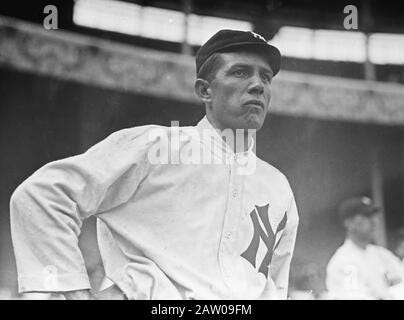
He came to the Yankees from the Sox.
He once hit .371 in a season.
But the first Babe to be a Yankee, was not great, nor legendary. He certainly was not Ruthian. This Babe was just a regular ballplayer passing through the big leagues in what has now become a forgotten career that nonetheless had some notable moments.
This Babe came to the Yankees in 1913 in what was, at the time, a noteworthy trade that involved one of the first great Yankees players. And after his brief one-season stay with the Yankees, he went to the Federal League where he starred before returning to the Major Leagues along with a future Hall-of-Famer and at least one other noteworthy player.
But, before we get into any of that, let’s begin at the start.
Babe Borton began his professional baseball career in 1910 in Iowa with the Ottumwa Packers where, in 133 games, he batted .293.
In 1911 and 1912, Babe Borton played for the Drummers who hailed out of St. Joseph, Missouri. Over 236 games, Borton beat the baseball to the tune of a .358 batting average. In early September of 1912, Borton was in the Major Leagues playing for the Chicago White Sox.
A first baseman, Babe played in 31 of the team’s final 32 games batting .371 - an impressive start to his big league career.
As Babe Borton was socking the ball across the American League, the New York Highlanders were growing frustrated with their first baseman, Hal Chase.
Hal Chase was one of the first stars of the franchise that would soon be known as the Yankees. A gifted defensive first baseman, still considered today as one of the best of all-time, Hal Chase was also a solid hitter who batted as high as .323 in 1906. Chase though, seemed to be more trouble than he was worth. His was a career of battles with the team and a host of gambling accusations.
In 1913, the Yankees had had enough of Chase and traded him to the White Sox for Babe Borton and one other player. Unfortunately for this Babe, his arrival in New York did not come with many hits. Over 33 games, Borton batted just .130 and was not brought back to the Yankees the next season.
Babe Borton spent 1914 in the minor leagues hitting .301 over 181 games for the Venice Tigers of the Pacific Coast League.
In 1915, Borton signed to play in the Federal League. For one season, he shined there. Playing for the St. Louis Terriers, Borton led the Federal Lague in games (159), runs (97), and walks (92). (Hal Chase, who had also jumped to the Federal League led that league in 1915 with 17 home runs for the Buffalo Blues.)
In February 1916, the St. Louis Browns purchased the contracts of ten players from the Federal League’s Terriers including Babe Borton who played in 66 games for the Browns and batted just .224 ending his Major League career. Also in that 10-player purchase was future Hall of Fame pitcher Gettysburg Eddie Plank and Armando Marsans - the first baseball player from Cuba to have an impactful Major League career.
From 1917 through 1920, Babe Borton played in the Pacific Coast League. Across those seasons, playing for the Portland Beavers and the Vernon Tigers, Borton batted .303. His career though came to an end when Borton, like the player he was initially traded for, Hal Chase, found himself involved in a gambling scandal when he admitted to throwing games.
(The information in this article mostly came from reading and calculating statistics from Baseball-Reference and reading facts from the BR Bullpen.)
Paul Semendinger runs the Yankees site Start Spreading the News. His newest published books are West Point at Gettysburg Vol. 1 and The Greatest New York Yankees By Uniform Number.
Cleaning Up
My Favorite All-Star Games
By Dan Schlossberg
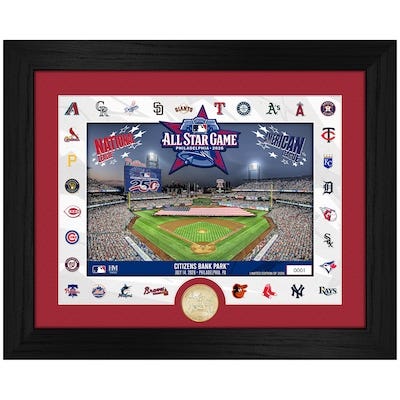
Experience has its privileges.
I’ve covered baseball since 1969 and watched — mostly in person — every All-Star Game since 1971. I’ve also studied baseball history and interviewed many participants in All-Star Games I only know from reading old issues of The Sporting News or watching newsreels.
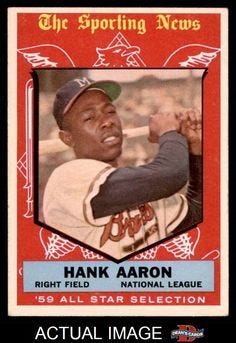
My list of interview subjects includes many Hall of Famers, including Bob Feller, Stan Musial, and Hank Aaron, so their memories helped refine this list of the Top 10 All-Star Games:
At Washington, 2018 — A real “home run derby,” this game not only featured a record 10 home runs but all were by different hitters. Tying or go-ahead homers were hit in the seventh, eight, ninth, and tenth innings. Three of them came in the 10th, which had produced the same number of home runs in the previous 87 All-Star Games combined. Consecutive pinch-homers by Houston teammates Alex Bregman and George Springer made the difference in an 8-6 win that was the sixth in a row for the American League.
At Detroit, 1941 — The NL took a 5-3 lead into the last of the ninth when Billy Herman made a bad throw on a grounder that should have started a game-ending double-play. With two outs and two men on, Ted Williams hit a game-winning home run against the facade of the third tier in right field. AL 7, NL 5.
At Chicago, 1983 — Fred Lynn’s grand slam, the only one in All-Star history, capped a 13-3 AL win in the 50th anniversary All-Star Game at Comiskey Park. The American League also scored 13 runs, an ASG record, in 1992 and 1998.
At New York, 1964 — Johnny Callison’s three-run, ninth-inning homer against fireballing Boston closer Dick (the Monster) Radatz capped a four-run rally that gave the Senior Circuit a 7-4 win at the new Shea Stadium.
At Atlanta, 1972 — Hank Aaron, a mysterious bust in All-Star play, treated his hometown fans to a rare home run against long-time nemesis Gaylord Perry. The Nationals eventually prevailed, 4-3 in 10 innings.
At Boston, 1999 — Pedro Martinez of the host Red Sox thrilled the Fenway faithful by fanning the first four NL hitters and five in the first two frames. The first pitcher to strike out four straight hitters at the start of an All-Star Game, he helped the Americans beat the Nationals, 4-1.
At Chicago, 1950 — In the first All-Star Game shown on network television and the first that needed extra innings, spray-hitting Red Schoendienst suddenly turned slugger in the 14th inning. His solo shot at Comiskey Park capped a 4-3 NL victory — the first time the Nationals won in an American League venue.
At Cleveland, 1954 — Three years later, Schoendienst was on third base in the eighth inning when Dean Stone came into pitch for the AL. Trying to capitalize on the confusion, the runner broke for home, where Stone’s hurried throw arrived ahead of him. That kept the game tied and Stone was pitcher of record on the winning side when the Americans pushed across a pair in the ninth. He never threw a pitch in the 11-9 victory.
At Detroit, 1941 — Ted Williams had two home runs, two singles, and a walk as the American League walked all over their Senior Circuit rivals, 12-0, at Briggs Stadium. The second one came on a high, arcing blooper pitch thrown by Rip Sewell.
At New York, 1934 — In the second All-Star Game, National League starter Carl Hubbell of the host New York Giants fanned five future Hall of Famers after giving up a single and walk to open the game. His victims were Babe Ruth, Lou Gehrig, Jimmie Foxx, Al Simmons, and Joe Cronin. P.S. The AL eventually prevailed, 9-7.
Honorable Mention: Denver (1998), San Francisco (2007), Chicago AL (1933), Los Angeles NL (2022).
HtP weekend editor Dan Schlossberg of Fair Lawn, NJ has a chapter on All-Star history in his book The New Baseball Bible: Notes, Nuggets, Lists, and Legends from Our National Pastime. He’s also the author of 42 other books and a contributor to Memories & Dreams, USA TODAY Sports Weekly, Sports Collectors Digest, Lucas Communictions, and Here’s the Pitch. Dan’s email is ballauthor@gmail.com.
Extra Innings: All-Star Marks to Chase
Ichiro hit the only inside-the-park home run in All-Star history . . .
Pete Rose and Paul Molitor played five different positions in All-Star annals . . .
In All-Star play, Willie Mays had 23 hits, 20 runs scored, 40 total bases, and six stolen bases over 24 games . . .
Two All-Star games (1961 and 2002) ended in ties . . .
The only All-Star Game at Brooklyn’s Ebbets Field (1949) was noteworthy because black players appeared for the first time: Jackie Robinson, Roy Campanella, Don Newcombe, and Larry Doby . . .
The 2008 All-Star Game at Yankee Stadium went to the AL, 4-3, in 15 innings and broke records for time (4:50), strikeouts (34), pitchers (23), and stolen bases (7) . . .
Players with two homers in an All-Star Game: Arky Vaughan (1941), Ted Williams (1946), Al Rosen (1954), Willie McCovey (1969), and Gary Carter (1981) . . .
Don Drysdale started two All-Star Games in one year (1962) when the leagues played two Midsummer Classics for four seasons (1959-62) . . .
Warren Spahn was the only pitcher to start All-Star Games in three different decades.
Know Your Editors
Here’s the Pitch is published daily except Sundays and holidays. Benjamin Chase [gopherben@gmail.com] handles the Monday issue with Dan Freedman [dfreedman@lionsgate.com] editing Tuesday and Jeff Kallman [easyace1955@outlook.com] at the helm Wednesday and Thursday. Original editor Dan Schlossberg [ballauthor@gmail.com], does the weekend editions on Friday and Saturday. Former editor Elizabeth Muratore [nymfan97@gmail.com] is now co-director [with Benjamin Chase and Jonathan Becker] of the Internet Baseball Writers Association of America, which publishes this newsletter and the annual ACTA book of the same name. Readers are encouraged to contribute comments, articles, and letters to the editor. HtP reserves the right to edit for brevity, clarity, and good taste.