
Author Ponders Century-Old Baseball Mystery
ALSO: ARE REVAMPED METS BETTER OR JUST DIFFERENT?

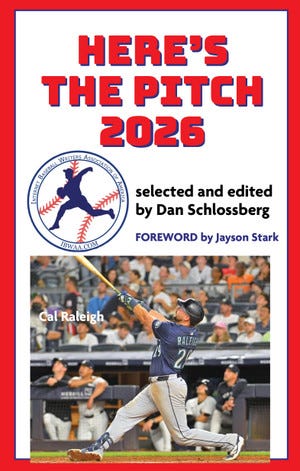
THE FIRST 2026 BASEBALL BOOK — CLICK HERE TO ORDER:
https://actapublications.com/here-s-the-pitch-2026
Pregame Pepper
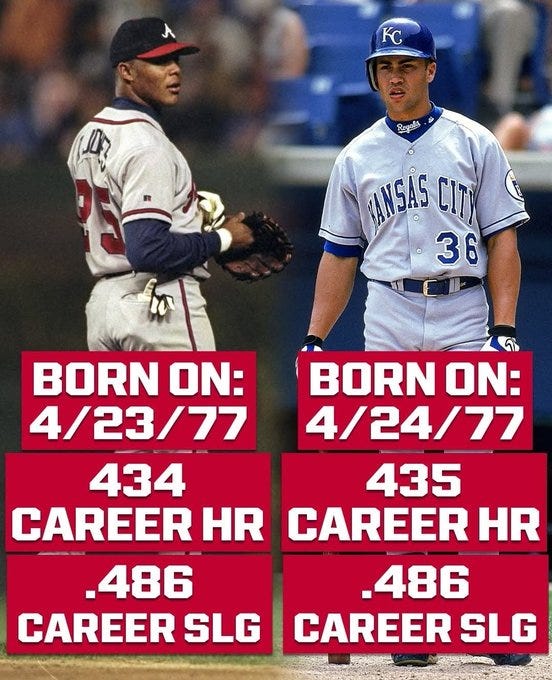
Andruw Jones and Carlos Beltran also combined for 13 Gold Gloves, including 10 in a row by Andruw . . .
The Nationals haven’t had a winning season since taking the world championship in their 2019 wild-card campaign . . .
Seranthony Dominguez, signed as a free agent, will be the new White Sox closer . . .
The Boston Red Sox remain the only team that has not signed anyone from the current free-agent class . . .
Newly-minted Hall of Famers Carlos Beltrán and Andruw Jones were separated by one day at birth and by one home run as ballplayers . . .
The Athletics will introduce themselves to their future fans in Las Vegas by playing several spring training exhibition games there this year.
Leading Off
Can We Solve This Century-Old Baseball Mystery?
By J.B. Manheim
A 2018 Antiques Roadshow episode reprising a 2003 Savannah broadcast featured a collection of WWI military records from Camp Hancock, a training facility located just outside Augusta. Included were baseball-related documents, among them a roster and daybook from a company of trainees that included Ty Cobb, Christy Mathewson, Honus Wagner and a handful of additional future Hall of Famers. Cobb was listed as a corporal, Wagner as a sergeant, and Mathewson as the lieutenant in charge of the company. The records were dated June 1918 and signed by the company clerk. The Roadshow appraiser judged them authentic.
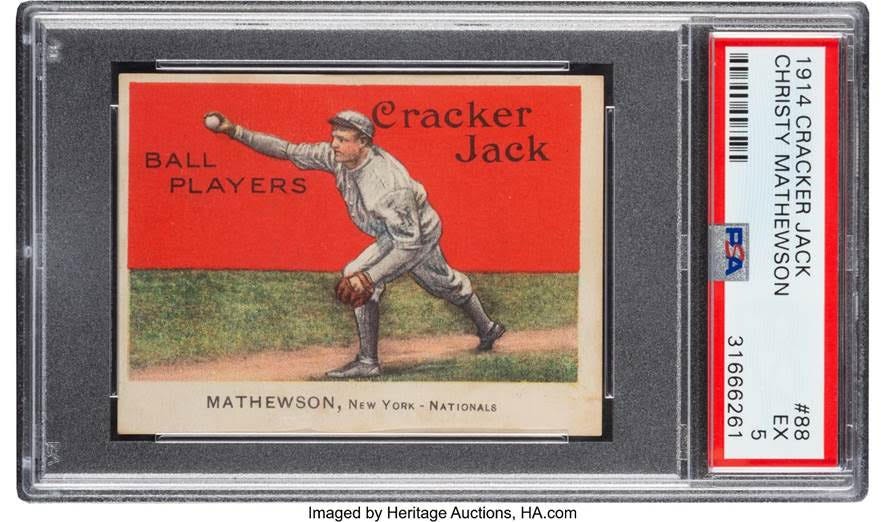
Herein lies a mystery. The delivered history of the period holds that only two of those listed, Mathewson and Cobb, served in the military during the war. Both reportedly joined the Chemical Warfare Service (CWS) in the fall of 1918 and went to France for training. There they were ostensibly exposed to poison gas, with Mathewson dying of tuberculosis a few years later as an apparent indirect result. Both were declared national heroes. As far as baseball history was concerned, Ordnance Depot Company 44 at Camp Hancock never existed.
This realization led me on a months-long search to locate the records and resolve the apparent inconsistency. There were two important clues. First, the unnamed owner of the papers (in 2003) appeared on the program, still in the network archive. Second, the papers included a journal compiled by the same clerk, the contents of which were not discussed on air. Locating the collector and the journal was the key. I reached out to the appraiser, the station that produced the program, editors and reporters who covered the taping for the local media, local and military museums, a Georgia-based Ty Cobb expert, a sports memorabilia auctioneer, and others. I checked the Hall of Fame collection and travelled to Augusta, where an editor searched the nonpublic archive of the local newspaper. Nada.
What I did learn was that the CWS had a recruiting problem, and the commanding general had held a major news conference in Washington urging prominent athletes, including baseball players, to join up as role models. He then undertook a recruitment program through Branch Rickey. It was Rickey who recruited Mathewson and Cobb. Hypothesis: Company 44 was almost surely meant to be a show unit to publicize the willingness of so many star athletes to train in the CWS.
But that’s where the trail ended.
There are many anomalies beyond a lost set of papers. Company 44 disbanded weeks before its planned end of training. Several members, including Mathewson, spent time in the base hospital. And most important of all, this propaganda unit, seemingly the product of a great effort, not only generated no propaganda, but disappeared from history altogether. Evidence suggests that even the local Augusta press was censored. Also, reliable witnesses later claimed Mathewson was never exposed to poison gas in France, though in his autobiography Cobb disagreed. But Mathewson likely was exposed to TB years earlier because his brother was a victim of the disease. Finally, the relevant military personnel records were later lost in a fire at the National Archives.
Something apparently went wrong, but what?
Having failed as a true detective, I resorted to creating a fictional one. I constructed a plausible explanation for these events, which became the plot driver of my first novel, This Never Happened: The Mystery Behind the Death of Christy Mathewson. The plot posits a coverup of a training accident – something that would have fit very neatly within the information management methods of George Creel’s Committee on Public Information, the nation’s first propaganda agency. That was mere surmise but, at least for now, it may be the best available reconciliation of the discrepancies in the record.
Perhaps not. Somewhere, in Georgia or elsewhere, is a collector of military memorabilia who has in his possession a box of documents from Camp Hancock that includes the roster and daybook. That collection may ALSO still include the clerk’s journal or diary, the contents of which remain unknown to baseball historians. And in that journal, we may find much more detail about the events of June 1918 at Camp Hancock. We may find out what really did happen.
I encourage interested members of IBWAA to engage with this mystery. To that end, I suggest two starting points. First check out the background material on my website at www.jbmanheimbooks.com/thisneverhappened/. Follow the incorporated links to the papers and the local news coverage. Second, watch the 2018 rebroadcast of the papers segment of Antiques Roadshow, which you will find at the following URL: https://www.pbs.org/wgbh/roadshow/appraisals/1918-wwi-baseball-player-documents/.
The key to a solution is unchanged: identify and contact the collector. In the video he appears from 2003, so he would be more than twenty years older today. But if you happen to recognize him, the trail is open before you
J.B. Manheim is the award-winning author of baseball-themed mysteries, legal thrillers, and nonfiction books, and a regular contributor to this newsletter and to various SABR publications. Learn more by visiting his website at www.jbmanheimbooks.com.
Cleaning Up
Mets: Maybe Not Better But Definitely Different
By Dan Schlossberg
This has been a roller-coaster winter for Mets fans. Now they hope it hasn’t been a nuclear winter.
No, wait, let’s leave that til next winter, when a lockout is likely to freeze the winter meetings, free-agent and trade activity, and hugs chunks of spring training if not the 2027 regular season.
So let’s get back to 2026, when the biggest obstacles a truncated spring training caused by the poor timing of the World Baseball Classic and a crescendo of complaints about the likely lockout that is a lock to start the second the current Basic Agreement expires (mark the ignominious date: Dec. 1, 2026).
The biggest baseball story of the pending new season is the complete transformation of the New York Mets.
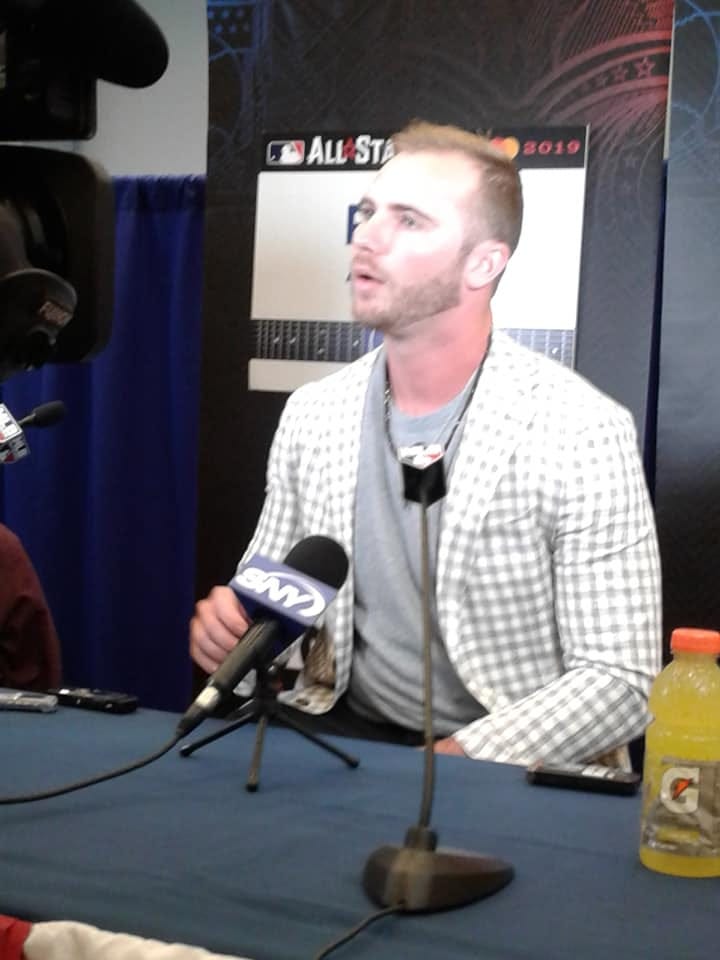
This is a team that lost its Core Four in Pete Alonso (signed with Baltimore), Edwin Diaz (took a three-year deal from the Dodgers), Jeff McNeil (traded to Athletics), and Brando Nimmo (shipped to Texas). Also gone is durable submarining reliever Tyler Rogers, a right-handed workhorse who made more appearances in 2025 than any other pitcher. He’s now in Toronto.
But it’s also a team that added free agents Bo Bichette, Jorge Polanco, Devin Williams, and Luke Weaver and acquired likely No. 1 starter Freddy Peralta (from Milwaukee), Marcus Semien (from Texas), and Luis Robert, Jr. (from the White Sox) in trades.
That flurry of activity turned the denizens of Flushing into a good news / bad news repository.
The Good News is that Peralta is a durable right-hander who led the National League in victories. His well-earned nickname is Fastball Freddy.
There’s more good news too: Semien is a smooth-fielding defender who figures to form a fine double-play tandem with All-Star shortstop Francisco Lindor. He’ll also help defray the right-handed power lost when the Polar Belt’s lifelong tenure melted.
Bichette hits for power and average — another plus — and Robert fills a defensive crater in center field. So good news there too.
Now for the Bad News.
Bichette is shifting from shortstop, where his glovework was never golden, to third base, where he has never played an inning. Likewise, Polanco is moving from second, where he was acceptable in Seattle, to first, where his resume includes a single game.
Even though Alonso’s range was weak, losing the bat of the team’s career home run king is going to hurt the run production. Bichette (18 homers last year) will be assigned to inherit the mantle of cleanup hitter — and we don’t mean Mickey.
Another position weakened by the winter maneuvering is left field, where Nimmo was dependable if not spectacular. Brett Baty, last year’s third baseman, now hopes to be the right man in left field. So that’s three men out of eight playing new positions.
Semien, 35, is also three years older than Nimmo. That age difference is a negative and could be a big one, since older players tend to contract injuries more often.
Subbing the erratic Williams and Weaver for the elite Diaz in the bullpen is an even bigger negative. Diaz, unlike most closers, was lights-out last year and has been for most of his career. He’ll give the Dodger Death Star the one thing it was missing last year — and set up his new team to be the first three-peat world champion since the 1998-99-2000 Yankees.
If the Mets can’t sign Peralta, a potential free agent this fall, he’ll turn into a one-year rental, while former top prospects Brandon Sproat and Jett Williams, who went to Milwaukee, could keep the Brewers at or near the top of the NL Central for five or six seasons.
All Mets pitchers will miss much-respected pitching coach Jeremy Hefner, a 39-year-old fountain of knowledge scooped up by the arch-rival Braves. Double negative here: Hef not only left but joined an arch rival. So did first base coach Antoan Richardson, a master instructor of the art of the steal. Look for Ronald Acuna, Jr., Michael Harris II, and Jurickson Profar to be running on the basepaths as well as in the outfield.
The Mets will also miss Acuna’s brother Luisangel, who gave the team speed, defense, and even occasional power (he had a four-homer game last week in the Venezuelan Winter League). If the White Sox don’t want him, the Braves might even pry him loose in the hope that having the brothers in the same clubhouse will inspire both. Atlanta also needs a shortstop patch with starter Ha-seong Kim idled until June (thumb injury).
With Groundhog Day right around the corner, the Mets hope to avoid repeating their epic collapse of 2025. But whether they can reach the playoffs or last deep into October will depend upon David Stearns solving the real-life jigsaw puzzle he has put together.
HtP weekend editor Dan Schlossberg of Fair Lawn, NJ covers baseball for forbes.com and many other outlets. He’s also the author of 43 baseball books. Book him for a talk by writing ballauthor@gmail.com.
Timeless Trivia: 1966 Was a Wild and Wooly Season
It’s hard to believe 60 years have passed since all these things happened:
Leo Durocher came out of retirement to manage the Chicago Cubs after its rotating board of head coaches went to the dustbin of baseball history
The Braves began their sojourn in the South after spending 13 years in Milwaukee, where they never had a losing season
Tony Cloninger, a pitcher, became the first National League player to hit two grand-slams in a single game
Frank Robinson won a Triple Crown and MVP award in his first year with the Orioles after the Reds called him “an old 30” and traded him
Led by Frank and Brooks Robinson, plus a kid pitcher named Jim Palmer, Baltimore swept the favored Los Angeles Dodgers in the World Series
Wally Bunker did something Archie Bunker never did: pitch a shutout in the World Series
Sandy Koufax won 27 games and crafted a 1.73 ERA but retired at age 30 after the season because of severe arthritis in his pitching arm
Koufax and Don Drysdale started the season by not starting the season — holding out together until the Dodgers offered salaries of $125,000 and $110,000
Yet another future Hall of Famer, Don Sutton, was a rookie on that same staff
Hank Aaron matched his uniform number with a league-best 44 home runs
Thanks to illness, injuries, and advancing athletic age, the once-proud Yankees fell into the AL cellar and stayed there, finishing 10th in the 10-club league
Future Hall of Famer Eddie Mathews, the only man to play for the Braves in Boston, Milwaukee, and Atlanta, was traded to the Houston Astros in December
Know Your Editors
Here’s the Pitch is published daily except Sundays and holidays. Benjamin Chase [gopherben@gmail.com] handles the Monday issue with Dan Freedman [dfreedman@lionsgate.com] editing Tuesday and Jeff Kallman [easyace1955@outlook.com] at the helm Wednesday and Thursday. Original editor Dan Schlossberg [ballauthor@gmail.com], does the weekend editions on Friday and Saturday. Former editor Elizabeth Muratore [nymfan97@gmail.com] is now co-director [with Benjamin Chase and Jonathan Becker] of the Internet Baseball Writers Association of America, which publishes this newsletter and the annual ACTA book of the same name. Readers are encouraged to contribute comments, articles, and letters to the editor. HtP reserves the right to edit for brevity, clarity, and good taste.
Ranger Suarez?