
Detroit Bets Its Future On Top Prospects
ALSO: BRAVES WHOSE NUMBERS NEED TO BE RETIRED

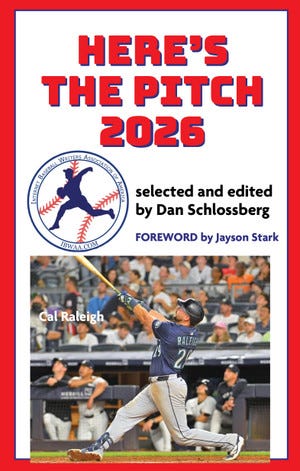
GREAT GIFT: THE FIRST 2026 BASEBALL BOOK — CLICK HERE TO ORDER
https://actapublications.com/here-s-the-pitch-2026
Reader Reacts: Why Is Marvin Miller In the Hall?
• It is beyond me that a labor union executive like Marvin Miller has a HoF plaque. He cared nothing about baseball fans, for whom the HoF is intended. His view of MLB players as laborers, like carpenters or teamsters, was narrow and callous. They are skilled athletes who play a spectator sport hinged to career statistics. The 1981 stat-breaking union strike stopped Tommy John’s candidacy for now, and probably permanently for the great Dwight Evans.
• Hoping that Tommy John keeps his health for the next several years and finally, deservedly gets a 2028 Veterans Committee HoF nod.
• Then there is 4x NL batting champ Bill Madlock, who has been ignored by any of the Veterans Committees. His career batting average is .300+ while he edged past 2000 career hits. That total was no thanks to his losing about 50 career hits when he won the 1981 Miller-shortened season batting title.
— Jim Rowbotham, Manhattan
[Editor’s Note: Marvin Miller’s nomination was rejected seven times by Veterans Committee voters before he finally won a plaque in the Hall of Fame — even though there is no category that he actually fits. As the engineer of multiple work stoppage, his election remains highly controversial.]
Pregame Pepper
Edwin Diaz rejected a five-year contract offer from the Braves because it didn’t contain the highest annual average ever awarded a closer . . .
His three-year, $69 Dodgers deal has a $23 million annual average . . .
The denizens of Chavez Ravine not only lead the league in payroll but also in deferred dollars for their players . . .
With Diaz gone from the Mets bullpen, the team has been raiding its crosstown neighbor, signing Devin Williams and Luke Weaver this year to join 2024 acquisition Clay Holmes (converted from relief to the rotation) . . .
Three-time MVP Mike Trout, though plagued by injuries in recent seasons, is slated to see some reps in center field — his original position — in 2026 . . .
Corner infielder Munetaka Murakami faces a Monday signing deadline if he’s going to jump to the majors on the strength of his old 56-homer campaign . . .
Because of defensive shortcomings, he could wind up as a DH in the Kyle Schwarber mold.
Leading Off
The Prospects Impacting Tigers Free Agency
By Joe Underhill
It’s almost Christmas and many Detroit Tigers fans are still hoping for an epic signing of either Alex Bregman or Bo Bichette to buoy manager AJ Hinch’s everyday lineup, but is that realistic? The Tigers have already re-signed Gleyber Torres (qualifying offer accepted) to a one-year contract and have several high-profile prospects knocking on the door.
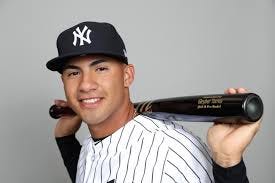
In his post-season press conference and in comments he has made at various points during the off-season, team president Scott Harris has indicated a strong belief in the team’s top prospects impacting the Tigers’ lineup in 2026. He has also said on multiple occasions that the team’s need to have a runway for their prospects to ease into playing time without having to extensively look over their shoulder.
The Tigers’ top three prospects, according to MLB Pipeline, finished the year at AA Erie. Kevin McGonigle is considered one of the best prospects in baseball (MLB #2) and has been playing predominantly shortstop, but there are a number of evaluators who wonder if he will be better suited long-term at second base.
Max Clark (MLB #9) could be patrolling center field soon, pushing incumbent Parker Meadows to a corner. Having Meadows and Clark patrolling two-thirds of the outfield should have future Tigers pitchers salivating.
Finally, Josue Briceno (MLB #33), whom the Tigers are still hoping can be at least a part-time catcher torched High-A, before struggling a little with the adjustment to AA. He can also play first base.
These aren’t their only prospects close to the majors.
Thayron Lirzanzo (C/1B, Tigers #5), Hao-Yu Lee (2B/3B, Tigers #6), Max Anderson (2B/3B, Tigers #9), plus players like Jace Jung (2B/3B), Trey Sweeney (SS, 3B), Trei Cruz (INF/OF), and Gage Workman (INF/OF) could factor into the spring competition, even though the names to watch are Max Anderson and Trei Cruz.
Anderson has elite bat-to-ball skills and Cruz fits the description of a Tigers utility prospect able to play above-average defense all over the diamond.
Along with the prospects, the Tigers also need to find at-bats for Colt Keith (1B/2B/3B), Zach McKinstry (silver slugger, UT), Javy Baez (SS, CF, 2B), Spencer Torkelson (1B), and the return of Matt Vierling (3B, OF) from injury.
It is quite possible all of these prospects will need some more time at the minor-league level to polish their skills before they are ready.
It is also (probably likely) that the Tigers will end up including one or more of these players or those on the active roster to bolster the roster. The Tigers do not want to block their elite prospects — making a long-term signing of Alex Bregman or Bo Bichette highly unlikely.
The percentage bet here is that McGonigle, fresh off his MVP in the Arizona Fall League, will break camp with the Tigers, sharing shortstop reps with McKinstry and Baez while also seeing a little time at second and third to help keep his elite bat in the lineup. The other bet is either sometime in June, or when the injury bug strikes, Clark will also make his debut, giving the Tigers a dynamic table setter and defender.
Joe Underhill is a high school administrator and diehard baseball fan and fan of the city of Detroit. Joe currently writes for the HTP Newsletter. You can follow Joe on Twitter@TransplantedDet and @transplanteddet.bsky.social. Email him via joe.underhill@auburn.org.
Cleaning Up
Numbers the Atlanta Braves Should Retire
By Dan Schlossberg
Aside from enshrinement in the Baseball Hall of Fame, the biggest honor a player can receive is retirement of his uniform number.
Many clubs — especially the New York Yankees — have made a habit of retiring numbers with regularity, even retiring No. 8 twice (for Bill Dickey and Yogi Berra).
The Dodgers, honoring players from both their Brooklyn and Los Angeles homes, also have a large number of players whose uniforms are retired, never to be worn again. In fact, newly-signed Edwin Diaz had to relinquish No. 39 — worn by the late Hall of Famer Roy Campanella — for No. 3, honoring his three sons.
But not all teams are on the ball when it comes to honoring their great players with retired numbers.
The Atlanta Braves are a case in point.
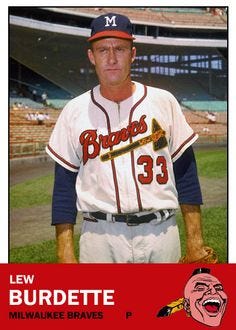
While they were still based in Milwaukee, a pitcher named Lew Burdette pitched the team to an upset victory over the Yankees in the 1957 World Series. He threw complete-game shutouts, including one in Game 7 on two days of rest, to wrap up the World Series MVP award.
Best known as Warren Spahn’s right-handed sidekick, Burdette had more wins (203) than Roy Halladay and a better earned run average (3.66) than Jack Morris. Yet his name is never mentioned when Cooperstown candidates are discussed.
Burdette’s No. 33 should have been retired years ago — especially after the great right-handed pitcher passed away in 2007 at age 80. Instead, it was bandied about, worn by the likes of Steve Avery, Brian Jordan, A.J. Minter, and even manager Fredi Gonzalez.
Speaking of pitching, Leo Mazzone was one of just three men — along with pitcher John Smoltz and manager Bobby Cox — to wear a Braves uniform during the team’s record 14-year title streak. Without Mazzone, whose philosophy included making his staff throw twice between starts, the trio of Greg Maddux, Tom Glavine, and Smoltz might not have Cooperstown plaques today.
Since Mazzone himself was somehow overlooked for the Hall’s gallery, the least the team could do would be to retire his No. 54. But Max Fried wore it throughout his tenure with the team before splitting for the greener pastures of Yankee Stadium last season.
And then there’s Brian Snitker, who just retired as manager after a 10-year run that included a world championship and six straight division crowns. Still employed as an advisor to general manager Alex Anthopoulos, the 70-year-old Snitker deserves to have his No. 43 retired. The one-time minor-league catcher will celebrate his 50th year with the organization in 2026.
Even Chipper Jones endorsed the idea of retiring Snitker’s number.
There are other possibilities too: No. 2 for Red Schoendienst, No. 8 for Javy Lopez, No. 9 for Joe Adcock, No. 11 for Darrell Evans, No. 12 for Dusty Baker, and quite a few more.
As the Braves ponder their promotions for 2026, they would do well to consider some of these suggestions. They should be proud of their past and willing to share it with their fans.
HtP weekend editor Dan Schlossberg may live in New Jersey but has been a rabid Braves fan since 1957. The author of 43 books can be reached through email ballauthor@gmail.com.
Extra Innings
The looming lockout, less than a year away, has much to do with the impasse keeping the top free agents unsigned . . .
A signing deadline would help, just as trading deadlines have helped in the past, but not publicizing each signee’s salary terms would help more . . .
Not surprised that Pete Alonso got almost identical terms — except for $5 million more — as Kyle Schwarber as both inked five-year contracts . . .
One of the reasons Edwin Diaz picked the Dodgers was a good “scouting report” from brother Alexis, who had a short but enjoyable stay with the World Champions . . .
Free agent slugger Munetaka Murakami has a Monday at 5 EST deadline to pick a team or stay in Japan . . .
Front-runners for his services are the Dodgers, Cubs, and Mets, all of whom already have Japanese players who would be more than welcoming.
Know Your Editors
Here’s the Pitch is published daily except Sundays and holidays. Benjamin Chase [gopherben@gmail.com] handles the Monday issue with Dan Freedman [dfreedman@lionsgate.com] editing Tuesday and Jeff Kallman [easyace1955@outlook.com] at the helm Wednesday and Thursday. Original editor Dan Schlossberg [ballauthor@gmail.com], does the weekend editions on Friday and Saturday. Former editor Elizabeth Muratore [nymfan97@gmail.com] is now co-director [with Benjamin Chase and Jonathan Becker] of the Internet Baseball Writers Association of America, which publishes this newsletter and the annual ACTA book of the same name. Readers are encouraged to contribute comments, articles, and letters to the editor. HtP reserves the right to edit for brevity, clarity, and good taste.