
A Dignified Centenary
Remembering Ralph Branca; and, some news you can use, misuse, abuse . . .
Pregame Pepper
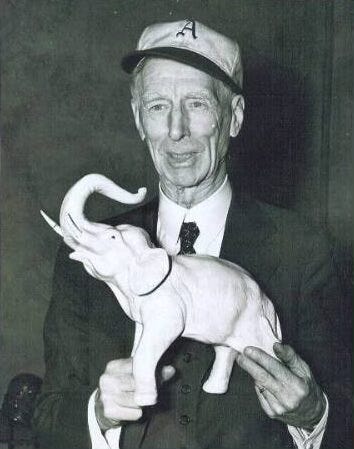
. . . That’ll Leave a Trademark Dept.—As if there wasn’t enough mischief involved in the Athletics moving to Las Vegas, the team was just told, “Request denied,” by the U.S. Patent and Trademark Office. They sought to trademark the names Las Vegas Athletics and Vegas Athletics, but the P.T.O. said “Athletics” is “too generic” and thus could be too confusing.
The team has until 29 March to ask for an extension to re-file over a six-month period, according to the Associated Press. The P.T.O. may seem unaware that the team’s nickname has been “Athletics” since they opened for business in Philadelphia in 1901.
. . . Second Verse, Same as the First Dept.—Why are the Phillies casting eyes upon veteran platoon bat/outfielder Randal Grichuk when they still have a near-match (in career value) who can hit lefthanded pitching in Nick Castellanos?
Answer, according to Yardbarker’s David Hill: The Phillies want to move on from malcontent Castellanos that badly, if possible. “In this case, the Phillies may find that addition by subtraction is the best option,” Hill writes, “even if that means bringing in a player with a similar offensive profile.”
Grichuk had a struggling 2025 just as Castellanos did, but no one seems to call him a clubhouse malcontent. Yet.
. . . Another Bronx Tale Dept.—The Yankees aren’t exactly sitting on their thumbs this offseason. They’re said to be hunting a starting pitcher more earnestly now that the new year has arrived. Their possible trade targets: Marlins pitcher Edward Cabrera and Brewers pitcher Freddy Peralta.
Much of the published speculation seems to think the Yankees might have a stronger interest in Cabrera since he’s under team control for this season and next, whereas Peralta’s entering his walk year.
The Yankee need is more acute than most, says The Athletic’s Chris Kirschner, because three of their prime starting arms—Gerrit Cole, Carlos Rodón, and Clarke Schmidt—won’t be opening the season with them while they continue recoveries from elbow surgeries.
. . . Stick Around Dept.—That would be Matt Quartaro, the Royals manager who’s been invited to stick around for three more years starting in 2027 and with a 2030 option. That’s thanks for two straight winning seasons, seemingly.
. . . Like Son, Like Father Dept.—Former first base star and major league manager Don Mattingly has signed on as the Phillies’ bench coach, the job he held with the American League champion Blue Jays last year. And the new bosses will include not just manager Rob Thomson but Mattingly’s son, Preston, now the Phillies’ general manager.
Leading Off
A Dignified Centenary
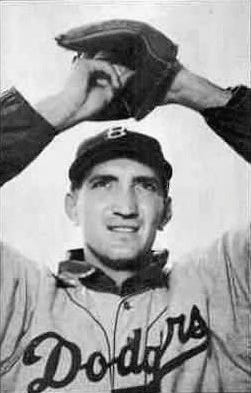
On earth, classy Ralph Branca would have turned 100 on Tuesday
By Jeff Kallman
Sometimes you might have sworn that the only person on earth who didn’t think Ralph Branca deserved better was Ralph Branca himself. If he had a moment or three when he wanted to find a mountain cave in which to hide or his fist in the face of yet another taunter, he still bore his worst individual defeat with uncommon grace.
It took time but Branca came to terms with having surrendered the once-fabled/long-since-tainted Shot Heard ‘Round the World. Appearing before either baseball or investment groups (he was a longtime life insurance seller turned financial advisor after baseball), he even developed a running gag for them.
“After two questions from the audience,” he told New York Times sportswriter Ira Berkow, “I’d say, ‘Isn’t somebody going to ask me how I felt?’ It was always the third question.”
Sports have had their goats, as in fall guys for someone else’s heroics, so long as there’ve been sports. But you can count almost on one hand how many of baseball’s had to live with and invert Branca’s infamy. He would have had to be beyond human if he didn’t tire of it a little more than now and then.
Until Bobby Thomson drove his second fastball into the Polo Grounds’s lower deck with the National League pennant attached to it, Branca might have stood to be remembered first as the fine young Dodger pitcher who’d been the first to line up next to Jackie Robinson in pre-game introductions, then befriended Robinson off the field for life.
Most of the time, Branca kept the troubling truth about how the 1951 National League pennant race went to a playoff to himself. He had affirmed what his Dodgers only suspected when, with his once-promising pitching career dissipated by injuries, he found himself on the 1953 Tigers and befriending fellow pitcher Ted Gray.
It was Gray who first told him the 1951 Giants hatched and executed an off-field-based sign-stealing plot while thirteen games out of first place with the Dodgers looking like a runaway pennant winner. Giants manager Leo Durocher decided his new acquisition (from the Cubs) Hank Schenz’s hand-held World War II spyglass was just the thing his men needed for that little extra something down the stretch.
“[Y]ou know Leo,” Branca quoted Giants reserve catcher Sal Yvars in his memoir. “If he thought it meant winning a game, he’d murder his mother.”
Durocher and his brain trust decided they’d station catcher-turned-coach (and a former Dodger) Herman Franks in the Polo Grounds clubhouse up behind center field with the spyglass. They’d wire a buzzer from that roost to the Giants bullpen, from where a tiny but visible light would flicker x number of times depending on the pitch the stolen signs called.
Then, they went from thirteen games out of first place to shooting the lights out down the stretch (40-14 in August and September, including a sixteen-game winning streak) and forcing the playoff with the Bums, who went a 33-26 that might have secured a pennant in just about any other race.
The plot was exposed once and for all half a century later by a Wall Street Journal writer, Joshua Prager, first in an expansive 2001 article and then in his book The Echoing Green: The Untold Story of Bobby Thomson, Ralph Branca, and the Shot Heard Round the World.
“Over the years, when interviewing Thomson and Branca, I’ve been struck that Thomson seemed a bit ambivalent about his Moment while Branca never seemed the least ashamed,” wrote Hall of Fame baseball writer Thomas Boswell in the Washington Post when Prager’s Journal article appeared.
I took it that Thomson felt apologetic because he’d caused Branca a lifetime of nagging questions . . . Whether Thomson took the stolen sign, Branca has been a man of honor for 50 years. He has never raised the cheating issue without proof or tarnished the game’s most replayed moment. Even now, Branca says, “He still hit the pitch.”
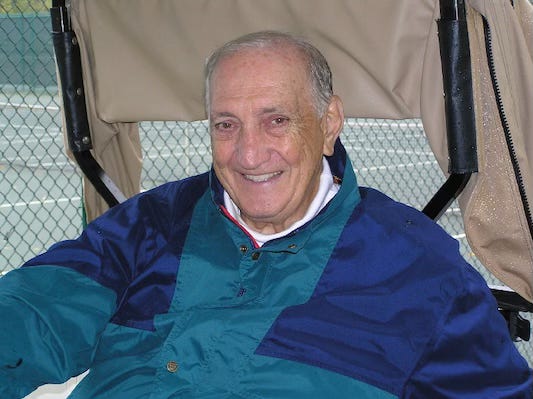
Branca’s post-pitching life didn’t stop at life insurance or occasional baseball-related broadcasting. He once appeared on the popular television puzzle game show Concentration, winning seventeen straight games before falling in a “Challenge of Champions” in 1963.
With Hall of Famer Warren Spahn and catcher-turned-broadcaster-raconteur Joe Garagiola, among others, he co-founded (and served as president until 2003) the Baseball Assistance Team. The BAT was created to help needy or indigent former major leaguers and their families.
Married since days after that ill-fated 1951 playoff to the daughter of a Dodgers co-owner pre-Walter O’Malley, Branca and his wife raised two daughters, one a dental hygienist and the other a special education teacher. (He was also the father-in-law of outfielder-turned-manager Bobby Valentine.) “Strange thing,” he told Berkow,” is that my quote notoriety, or being so-called infamous, for throwing that pitch, didn’t hurt my business.”
I was never shy about being in the public. I’ve been out of baseball for more than fifty years, and people still recognise me on the street. I know who I am. And if a client is curious about it, I’d talk with him about it. Most people are well-meaning. But there are some who like to zing people . . . Okay, but how many guys play big-league baseball How many guys have dreamed of it? I did it.
Before his injuries, Branca was a good pitcher who once led the National League in winning percentage and made three All-Star teams. But he did far more than just play big league baseball. The man who suffered the game’s most notorious individual defeat transcended that wound and the game itself.
“I was closer to Ralph than to any other Dodger,” said broadcast legend Vin Scully upon Branca’s death at 90. “We traveled around the world and became very good friends. He carried the cross of the Thomson home run with dignity and grace. I was grateful for his friendship and I grieve at his death. He was a great man.”
Jeff Kallman edits the Wednesday and Thursday editions of Here’s the Pitch. He writes Throneberry Fields Forever and lives in Las Vegas. You can reach him at easyace1955@gmail.com or easyace1955@outlook.com.
Extra Innings . . .
Ralph Branca’s “Challenge of Champions” competition on NBC’s Concentration, 16 September 1963 . . .
Know Your Editors
Here’s the Pitch is published daily except Sundays and holidays. Benjamin Chase [biggentleben@hotmail.com] handles the Monday issue with Dan Freedman [dfreedman@lionsgate.com] editing Tuesday and Jeff Kallman [easyace1955@outlook.com] at the helm Wednesday and Thursday. Original editor Dan Schlossberg [ballauthor@gmail.com], does the weekend editions on Friday and Saturday. Former editor Elizabeth Muratore [nymfan97@gmail.com] is now co-director [with Benjamin Chase and Jonathan Becker] of the Internet Baseball Writers Association of America, which publishes this newsletter and the annual ACTA book of the same name. Readers are encouraged to contribute comments, articles, and letters to the editor. HtP reserves the right to edit for brevity, clarity, and good taste.